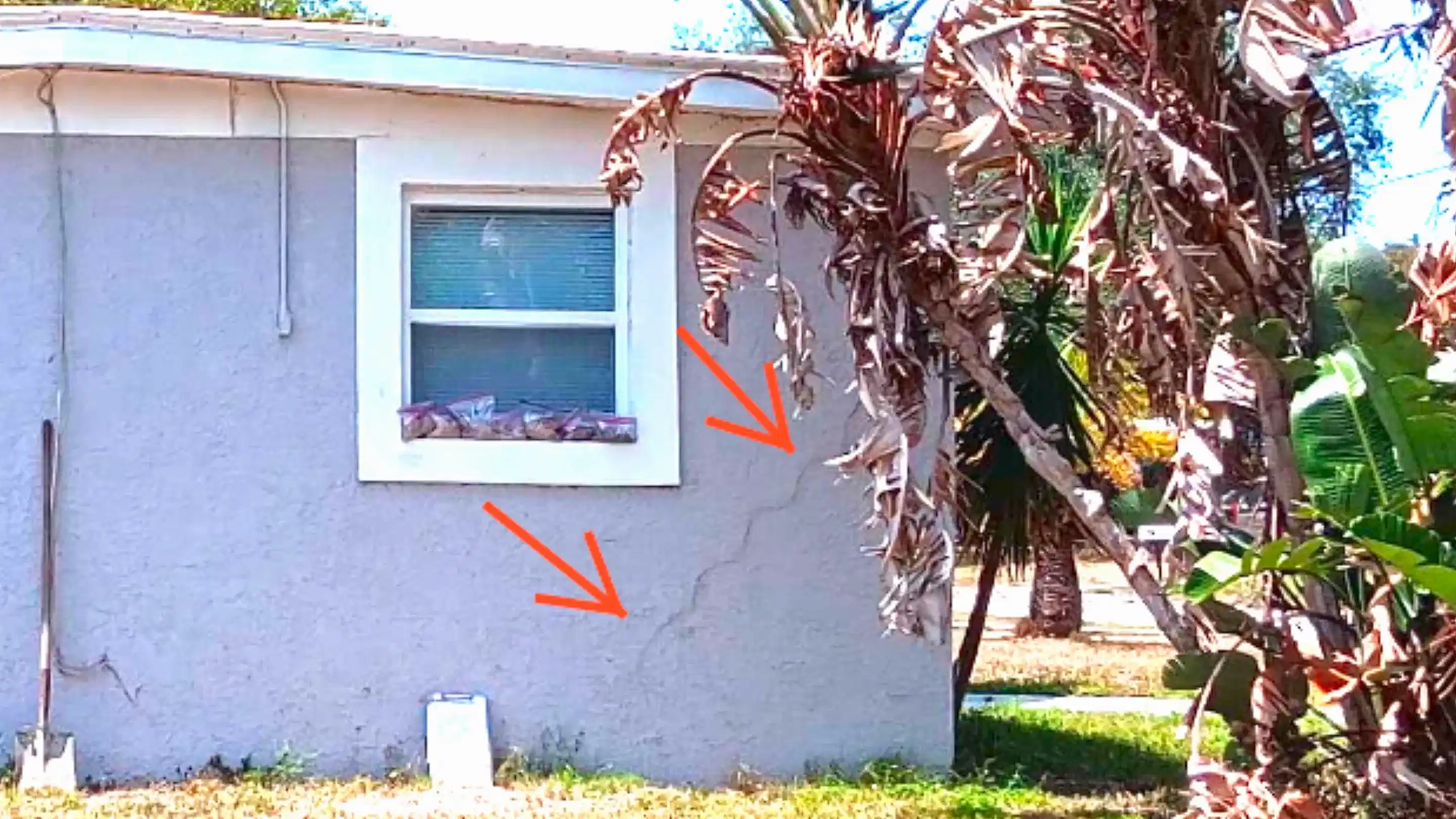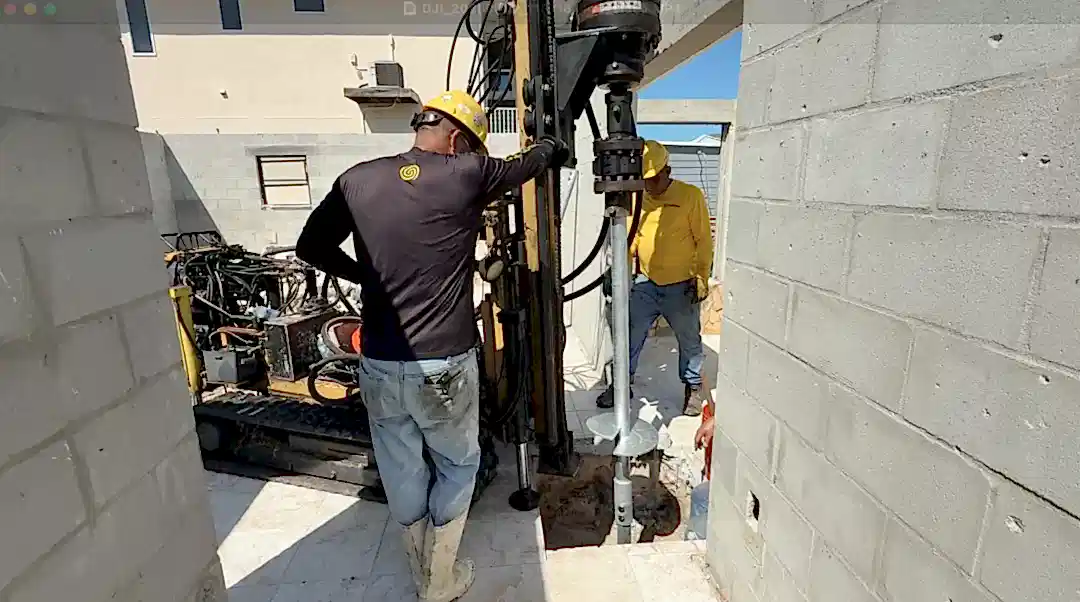

Understanding the various types of sinkholes and the factors that lead to sinkhole occurrences can be daunting without possessing an advanced degree in Geological Science.
With a little help from SFWMD, the Florida Department of Environmental Regulation Bureau of Water Resources Management and the Florida Department of Natural Resources Bureau of Geology, I will attempt to describe a sinkhole.
By definition, a sinkhole is a depression of the top layer of soil caused by the natural process of dissolved limestone.
How Does Limestone Dissolve?
Rainwater reacts to the natural buildup of Carbon Dioxide in the soil creating Carbonic Acid.
H2O + CO2 = H2CO3
(Water) + (Carbon Dioxide) = (Carbonic Acid)
Carbonic Acid and Limestone create Calcium Ions and Bicarbonate Ions that essentially dissolve the limestone.
H2CO3 + CaCO3 = Ca++ + 2(HCO3)-
(Carbonic Acid) + (Limestone) = (Calcium Ions) + (Bicarbonate Ions)
The reaction is not permanent, though. Over time the water assimilates the Calcium and Bicarbonate Ions, and the limestone is no longer affected.
So, Why Isn’t Florida Just One Big Hole?
The answer to that question is simply the soil. More specifically, the depth and type of soil determines the potential for the water to interact with the limestone.
During historical periods of glacial melting, the sea level rose as much as 100ft, covering much of the Florida we know today, and conversely, it receded all the way to the Continental Shelf during what is referred to as the Ice Age. All that activity contributed to a varied landscape.
Florida’s topography can be defined in four types:
- The limestone layer is right at the surface, covered by a shallow layer of sand. These areas are usually at or below sea level. Sinkhole occurrences are rare. Sinkholes that do occur are usually shallow and broad and occur slowly over time.
- The limestone layer is 30-200 ft below the surface and is covered with in-cohesive and permeable sand. Sinkhole occurrences are rare. Sinkholes that do occur are small and shallow.
- The limestone layer is 30-200 ft below the surface and is covered by clay and other cohesive sediments. Sinkholes are most common, can vary in size, and happen abruptly.
- The limestone layer is more that 200ft below the surface and is covered by cohesive sediments and clays. Sinkholes are rare, but several large-diameter, deep sinkholes have occurred.
The Perfect Storm
Hard, impenetrable soils such as clay over limestone can create what is referred to as a bridge. Over time, the limestone can dissolve away, creating a void between the layers. Once its support is taken away, the top layer of heavy soil may cave in simply due to a lack of support.
- Natural Drought Conditions
- Heavy Rains
- Excessive Pumping of Groundwater
- Vibrations from Heavy Equipment
So, there you have it. I hope this helps to explain what a sinkhole is. Next time we will discuss the signs that you may have a sinkhole on your property.